subscribe via RSS

on site support
May 7, 2026
Shopify App

Shopify app updates

A roundup of the biggest changes shipped to the Event Ticketing app over the last few weeks.
Built for Shopify renewal granted

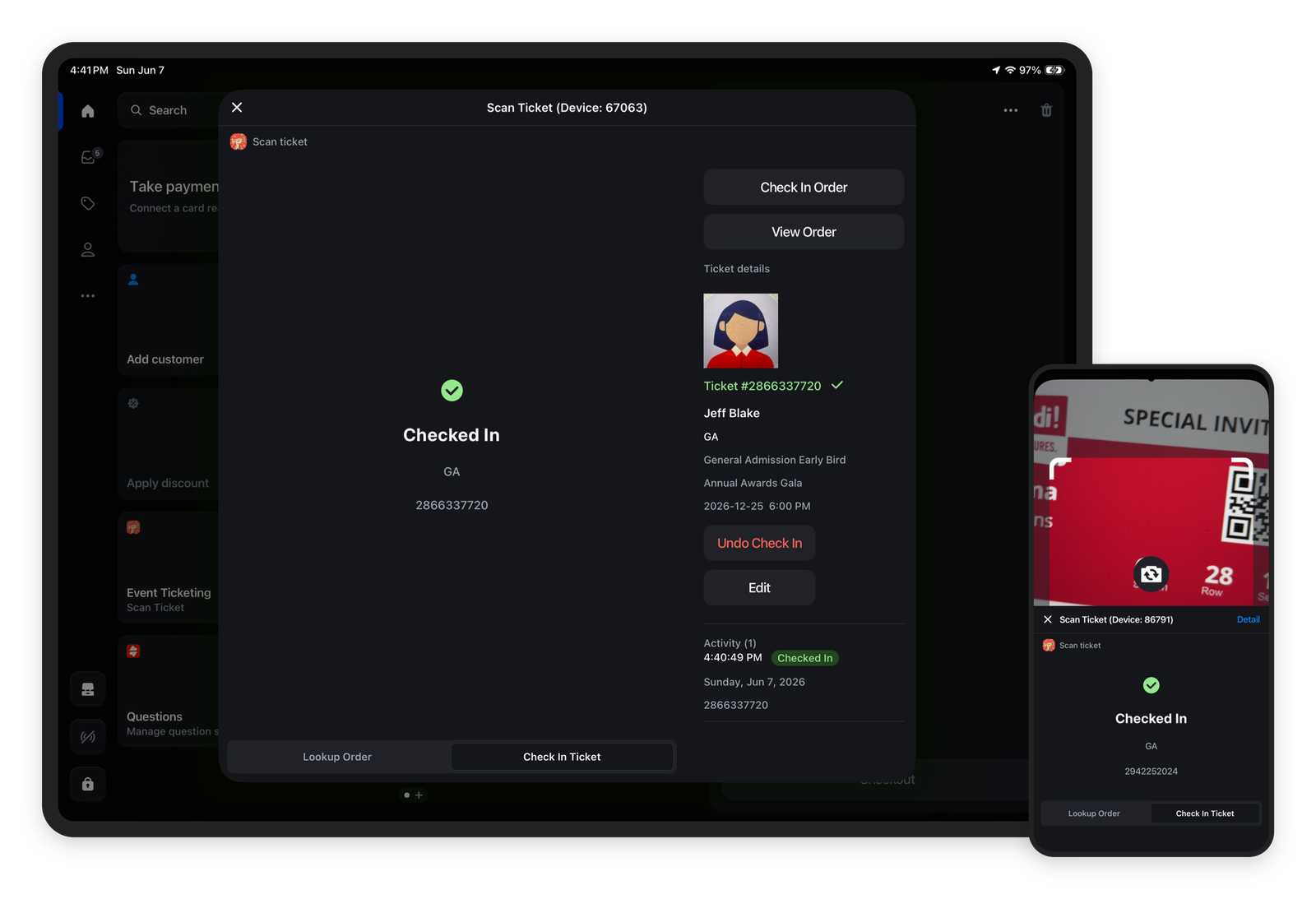
This week we received renewed Built for Shopify status, recertifying against the latest 4.2.3 standards. The Event Ticketing app has been part of the program since Shopify first launched it in 2022 — renewal recurs as the standards refresh. Most of the modernization work behind this round of renewal landed across April and early May, from the rebuilt POS app and checkout extension through to the app home redesign mentioned below.

Apple Wallet now works out of the box

Customizing the Apple Wallet template no longer requires uploading an icon. If you don’t supply one, your tickets fall back to the Event Ticketing app icon as a sensible default. The customize page also auto-creates a default template on first visit, so you land on a working preview straight away instead of a sequence of greyed-out buttons.

A pile of front-of-pass layout improvements shipped alongside:

  • All four enabled fields now stay on the front of the pass instead of overflowing to the back
  • Long values (event names, full venue addresses) auto-wrap at word boundaries
  • New per-template venue format option to pair the venue name with its address on a single field
  • Date fields render compactly and pair sensibly with adjacent fields

Held fulfillments recover automatically

When a Shopify order goes on-hold (fraud review, manual hold, payment delay), tickets previously stalled there. We now listen for fulfillment_holds/released and re-issue tickets automatically, while respecting your fulfillment preference setting (so an order that’s still awaiting payment won’t be force-fulfilled prematurely). Existing stuck orders are picked up too.

Multi-currency refunds

If your store sells in a presentment currency different from your shop currency, refunds now use the correct presentment amount. Previously the shop-currency amount could be passed to Shopify and rejected as a mismatch.

POS scanner can travel between stores

The Event Ticketing POS scanner can now scan tickets and orders issued outside the installed shop — useful when checking in attendees with passes issued by a separate Guest Manager account or an enterprise partner.

Faster PDF tickets, opening inline in the browser

Bulk PDF downloads (the “Download all tickets” link customers see on their order page) are noticeably faster — tickets now render into a single document instead of being assembled from per-ticket files, and we preload the data each ticket needs in one pass. Larger orders see the biggest speedup.

PDFs from customer-facing emails and viewer pages now also open inline in a new browser tab instead of silently downloading to disk. Several merchants flagged that on Chrome desktop, customers were clicking the “Print” link, watching the new tab close, and never realizing the PDF had been saved to their downloads folder.

Check In app: safer sync

The iOS Check In app’s offline-sync flow now rolls back partial saves cleanly if a record counter runs out mid-sync, rather than leaving a few records committed and the rest dropped. Combined with a new observability layer, this should put a stop to the rare “some attendees missing after sync” reports.

Product sync stops stepping on merchant data

A few places where the app was unintentionally overwriting merchant edits:

  • Variant metafields are preserved on every productSet — previously a sync could clobber metafields added in the admin
  • Ticket form values are preserved when a customer changes quantity in the checkout extension
  • Ticket names are no longer overwritten from stale default_address data after subsequent edits

App home redesigned

The merchant home screen got a refresh:

  • Install hub groups remaining setup work (POS, Checkout, Theme) into clearer sections
  • A new extension status card surfaces which extensions are deployed and which need attention
  • Setup guide is back above the fold

Behind the scenes

  • App Bridge v4 web component migration is complete — fixes a pile of modal regressions from older App Bridge releases
  • Bugsnag swapped for Sentry across JS and Ruby
  • Bumped to Ruby 4.0.3 and Puma 8 for a small reliability + performance bump

Minor fixes and improvements

  • Calendar block CTA and CarrierService now gate cleanly on plan features, instead of failing on non-eligible plans
  • Cursor pagination for tickets / orders / events on API v2 (offset pagination is deprecated)
  • Usage-charge money flow hardened — fewer false retries, clearer reasons when a charge can’t be created (cap-increase, write-offs)
  • Apple Wallet passes are now revoked when a ticket is transferred or voided, so the stale pass disappears from the customer’s wallet
  • Contact records no longer have their first/last names wiped by an incoming order with a blank name field
  • Several embedded-app modal regressions and tooltip fixes

April 14, 2026
Shopify App

Rebuilt POS app and checkout extensions

The two pieces of the Event Ticketing app that live inside Shopify itself — the Point of Sale app and the checkout extension — both got a full rewrite under the hood this week, as part of our latest Built for Shopify renewal cycle.

The functionality is the same as merchants have been running for years. What changed is the foundation: both are now built on Shopify’s modern UI Extensions framework, which means they look and feel like a native part of the Shopify experience, load faster, and give us a much better surface to extend going forward.

Event Ticketing has been in the Built for Shopify program since Shopify first launched it in 2022. Renewing against the current standards (Built for Shopify 4.2.3) is what drove this round of modernization.

Point of Sale app

The POS app got the most visible rework. The interface was redesigned from the ground up to match Shopify POS’s own components, and the scan flow was tightened up:

  • A Smart Grid tile that you can pin alongside your other POS actions, so the scanner is always one tap away
  • A simplified scan view that shows attendee name, ticket type, event, and validity at a glance after each scan
  • An order lookup screen that pulls up any Event Ticketing order from POS, with the tickets attached and check-in actions inline
  • A post-purchase prompt after selling event tickets at the till, so staff can scan or check the customer in immediately without leaving the sale
  • Better recovery from network blips and expired sessions so staff don’t get stranded mid-shift

If you used the previous POS app, the new version drops in as an upgrade — no reconfiguration required.

Checkout extension

A reminder of what this feature does, since it’s been a quiet workhorse since 2020 and we don’t talk about it often: the checkout extension surfaces the customer’s tickets directly on their Thank you page and on the Order status page they receive in the order confirmation email — so they can grab their tickets right after purchase without waiting for the email to arrive.

Each ticket exposes the actions the customer is most likely to want:

  • Download the PDF
  • Add to Apple Wallet
  • Edit attendee details (name, custom fields) when registration is required
  • Transfer the ticket to another person
  • Exchange the ticket for another event, date, time, or ticket type

The original version of this feature was a ScriptTag back in 2020. It moved to a Checkout extension when Shopify made that available, and is now a Checkout UI Extension on the modern framework. Functionally identical, but visually cleaner and faster to load — and easier for us to keep in step with whatever Shopify ships next.

Bigger event-variant ceiling

Events with many dates, Tickets, or registration types can now support a higher variant cap per Shopify product. Festivals and multi-date series that previously had to split themselves across multiple products to fit will find more configurations consolidate cleanly into one.

A note for the curious

For anyone interested in the technical side: the rebuild moved both extensions onto Shopify’s UI Extensions framework (Preact + web components), and the embedded admin SPA’s bundling pipeline was migrated from Webpacker to esbuild. The merchant-visible upshot is faster page loads in the admin and lower-latency POS scans — the rest of it lives in the engineering trenches.

December 31, 2025
Shopify App

2025 in review

A look back at the year. 2025 was less about big-bang launches and more about polish, reliability, and incremental features. Here are the highlights.

New features

More data on the Shopify Flow ticket_checked_in trigger. The Flow trigger that fires when a ticket is scanned at the door now ships richer trigger variables, so Flow automations have more to branch on — useful for tagging customers, granting loyalty points, or sending tailored follow-up emails. (The trigger itself has existed since 2022; this round expanded its payload.)

Attendee photos in the POS scan view. When an attendee uploads a photo during ticket registration, that photo now shows up on the scan-result screen at the door. Helps staff verify identity at high-trust events.

Link-type custom ticket fields. Custom fields on a ticket can now be a clickable link, alongside the existing text, dropdown, file upload, etc. types — handy for waivers, supplemental docs, or per-ticket URLs.

Configurable barcode display in custom PDF templates. The Custom PDF template designer gained a barcode display option, giving merchants more control over how the barcode renders on printed tickets.

List object in Liquid email templates. Email template authors can now reference a list’s properties directly in Liquid — useful for emails that group tickets across multiple events on a tour or season pass.

Public Campaigns API (v2). A new public API surface for campaigns lets merchants programmatically pull campaign data and send through their own integrations.

Embedded admin polish — driven by Built for Shopify renewal

A sustained UI pass across the Shopify embedded admin app in early July touched the event form, billing flow, refund flow, PDF and Apple Wallet template designers, and the overview screen. The driver was a Built for Shopify renewal cycle — the app’s been a member of the program since it first launched in 2022, and recertification against today’s standards is what kicked off the polish.

Storefront and theme extension fixes

Fee display on the theme block. The calendar and ticket-list theme app extension blocks were rendering fees incorrectly in some configurations — corrected.

Ticket transfer decline flow. When a transfer recipient declines, the page they land on now confirms the decline cleanly instead of looking like an error.

Variant ceiling raised for festival-scale merchants — a bump that started for one specific Shopify Plus event organizer and gradually rolled out broadly. (We pushed it further in spring 2026.)

Reliability and money-flow fixes

A few that mattered enough to call out:

  • Metafield preservation on product sync — variants stopped having their merchant-edited metafields wiped when the app updated their inventory or pricing
  • Refund processing — multiple cases where a refund could partially apply or fail silently were tightened up
  • Order editing — edits flowing in from Shopify (added items, address changes) merge into the existing event order more reliably
  • Inventory sync — a handful of edge cases where inventory adjustments were dropped or duplicated
  • Spam controls on guest-info forms — fewer junk submissions hitting the inbox of merchants running open RSVP flows

A new language

Traditional Chinese (zh-TW) joined the supported locale list in December, for merchants and customers in Taiwan, Hong Kong, and other zh-TW markets.

Annual maintenance

The Apple Wallet signing certificate was renewed (as it is every year, by Apple’s design) — existing wallet passes continue to validate without any merchant action needed.

December 31, 2024
Shopify App

2024 in review

A year of foundation work. 2024 was when most of the modernization that paid off in 2026 actually got built — App Bridge v4, Rails 8, a smarter GraphQL client, a new checkout UI extension, and the backend that the rebuilt POS app would later sit on top of. Plus a handful of merchant-visible features along the way.

New features

Japanese support. The Event Ticketing app now renders correctly in Japanese, including bundled CJK fonts so Japanese characters render cleanly on PDF tickets and Apple Wallet passes.

Basic plan support for the Shopify Flow ticket_checked_in trigger. The trigger has existed since 2022 but was previously gated to higher Shopify plans. As of February 2024, merchants on the Basic plan can build Flow automations that fire when a ticket is scanned at the door.

Quantity changes when editing orders. When a customer (or your staff) edits an existing event order in Shopify, the editing flow now properly handles quantity adjustments — adding or removing tickets — instead of treating the edit as an all-or-nothing replacement.

A new Checkout UI extension. A new generation of the checkout extension shipped in July, replacing the older ScriptTag-era version. This is the same surface that got further rewritten on Shopify’s modern UI Extensions framework in early 2026 — but the post-purchase ticket display you see today on the Thank you and Order status pages traces directly to this work.

POS app backend foundations. The server-side scaffolding for what would become the rebuilt POS app — order lookup, location/pickup mapping, a dedicated POS controller — landed in June. The visible POS app rewrite came later, but it’s standing on this.

Speed and reliability

Rails 8. A full upgrade to Rails 8 in early December, including a swap to Propshaft and the trimmer asset pipeline. Most merchants will only notice it as faster page loads and fewer occasional Rails-side gremlins.

Ruby 3.3 with YJIT enabled. YJIT is Ruby’s just-in-time compiler, which gives a measurable performance boost on hot paths. Combined with the Rails 8 upgrade, the app’s request latency dropped noticeably across the board.

GraphQL client with a points limiter. Shopify’s GraphQL API has a cost-based throttle — burn too many points too fast and your queries start being rejected. The new GraphQL client tracks the points budget in real time and paces itself to stay under the ceiling, instead of pushing into the throttle and retrying. The user-visible upshot: fewer stalled inventory updates and fulfillments during busy periods on Shopify Plus stores.

App Bridge v4. Shopify’s embedded-app communication layer got a major version bump. The Event Ticketing admin app moved with it — required for the upcoming Shopify embedded-app standards.

Jemalloc and various tuning. Memory allocator swap on the web and worker dynos, plus dialed-in Sidekiq concurrency. Translates to better memory headroom and fewer dyno restarts under load.

Bug fixes worth mentioning

  • Tickets count fix — a discardable-mixin edge case was occasionally undercounting tickets in some views; resolved
  • Events API filter fix — an issue where complex event filters could fail to apply on the public events API was tightened up
  • Reduced webhook chatter — Shopify product webhooks were filtered down to only the events the app actually needs, which cuts a lot of background load on busy stores
  • Spam controls on inbound merchant signup forms

Behind the scenes

A few items that don’t affect merchants directly but make the rest of the app better:

  • Token exchange auth migration. Shopify’s newer authentication model replaces the older OAuth flow with a session-token-based exchange. Less visible re-authentication, more reliable session handling.
  • Logging system overhaul. A big restructure of how the app emits logs and traces, in preparation for better observability tooling (which paid off when we replaced Bugsnag with Sentry in 2026).
  • APNS removal. An old, unused Apple Push Notification Service integration came out of the codebase — wallet pass updates use Apple’s PassKit Web Service directly.

December 31, 2023
Shopify App

2023 in review

A look back at 2023. The year landed a steady stream of merchant-facing features — ticket tags, expiration dates, custom fields in the Shopify sync, an “allow add guests” preference — alongside a couple of UI refreshes and the usual underlying-platform updates.

New features

Ticket tags. Tickets can now carry Shopify-style tags, and the app pushes tag changes through to Shopify so you can filter and segment customers based on tickets they hold. Surfaces in the public ticketing API and the embedded admin Tickets list.

Expiration field for tickets. Ticket types now support a configurable expiration date, which surfaces both on PDF tickets and Apple Wallet passes. Useful for time-bound passes (season passes, multi-day festival access, dated promotions).

Custom fields in the Shopify product sync. Custom ticket fields you’ve configured in Guest Manager now flow through to the Shopify product sync, making them visible alongside other product data on the Shopify side.

“Allow add guests” preference. A new company-level preference lets you opt in or out of letting customers add additional attendees during ticket registration.

Reporting API improvements. The public reports API got a refresh — check-ins, pickups, product breakdowns, and ticket reports were all reworked for cleaner output and better filtering.

Google Analytics 4 (GA4) switch. Tracking on storefront and admin pages migrated from Universal Analytics to GA4 ahead of Google’s UA sunset.

Shopify embedded admin: Polaris refreshes

Two rounds of Polaris (Shopify’s design system) updates landed in 2023:

  • A mid-year version bump in late July to keep the embedded app aligned with Shopify’s evolving component library
  • A larger v12 migration in December — Shopify shipped a major Polaris release with breaking changes to button and banner components, and the Event Ticketing admin moved with it. Some merchants will have noticed a slightly more modern look across forms, buttons, and notifications.

Speed and polish

A few smaller items that made the day-to-day a bit nicer:

  • Debounced searching on the Events list — typing in the search box no longer fires a request per keystroke
  • Cumulative Layout Shift fixes on the storefront — pages settle into their final layout faster, with less of the visual jitter that happens when fonts and images load at different speeds

Check In iOS app 4.0

The iOS Check In scanner shipped version 4.0 in August — its biggest release since the v3.x rewrite back in 2020. The release brought refreshed Brother label printer SDKs and Quantum/Linea barcode scanner accessory SDKs, alongside meaningful improvements to the sync, scan-result, and login layers of the app. Merchants running supported hardware (Brother label printers, Linea Pro / iMag Pro / Quantum sleds) get better compatibility and reliability with the latest SDK versions.

A 3.7.2 point release shipped in April ahead of the 4.0 work.

Annual maintenance

The Apple Wallet signing certificate was rotated in September, as it is every year — existing wallet passes continue to validate without merchant action.

Behind the scenes

  • Shopify’s GraphQL Admin API was bumped to the 2023-04 release version (Shopify rolls a new version quarterly; we keep current)
  • The Shopify Flow ticket_checked_in trigger (which originally shipped in 2022) had its worker and admin-form configuration refactored

December 31, 2022
Shopify App

2022 in review

The biggest shipping year the app has had in a while. The Event Ticketing app earned Built for Shopify status as one of the program’s launch-day participants, the storefront theme app extension shipped, Shopify Flow integration arrived, and a major performance overhaul moved tickets and orders to Elasticsearch. Plus a long list of smaller features and fixes.

Built for Shopify

Shopify launched the Built for Shopify program in October 2022 — a certification standard for apps that meet a higher bar for performance, design, accessibility, and merchant trust. The Event Ticketing app was an early adopter, working through Shopify’s app review process during the launch window and shipping a series of admin-app refinements (banners, billing flow, event form polish) to meet the standards.

New features

Theme app extension. A storefront-side extension for Shopify themes shipped in June, providing calendar and ticket-list blocks that merchants can drop into their theme’s section editor. Customers see upcoming events with native theme styling, no custom Liquid required.

Shopify Flow trigger: ticket checked-in. Built and shipped in May, this trigger fires whenever a ticket is scanned at the door. Merchants can wire Flow automations to send post-event emails, tag customers, grant loyalty points, or anything else Flow supports. Originally Plus-only at launch — Basic plan support was added in 2024.

Custom ticket fields. Configurable fields you can add to a ticket type to collect additional attendee information at registration time. The companion form-response system shipped alongside, with both surfaced in the embedded admin and the public ticketing API.

Order minimums and maximums. Per-event constraints on how many tickets a single Shopify order can include — useful for capping resale risk on high-demand events, or enforcing minimum group sizes.

POS feature work. First-party Shopify POS support arrived in August — a pos_controller, pickups API, and the initial scaffolding of what would become the rebuilt Shopify POS app years later.

Discontinue option for variants — gives you a way to gracefully retire a ticket type without deleting historical orders.

“Add contacts” features. Better support for managing the contact list that backs your event check-ins, including improved searching and filtering.

Site tracking integrations — easier setup for a few common analytics and pixel tools on your storefront.

Performance overhaul

Tickets and orders were moved to Elasticsearch in February — index, filter, and search now go through Elastic instead of Postgres. Large stores with hundreds of thousands of records saw the biggest improvement: lookups that previously timed out under load now return in milliseconds.

A handful of related modernizations shipped alongside:

  • React Router v6 upgrade in the embedded admin SPA
  • Tickets/orders table refactor to render server-side via DataTables.net
  • A rate-limiter audit across Shopify GraphQL callers — fewer transient throttling errors during sync-heavy operations

Internationalization

Translations expanded in May with several locale additions and an en-US fallback fix. The PDF and Apple Wallet templates were verified across the new locales.

Check In iOS app

The iOS Check In scanner shipped a series of 3.6.x point releases through the year (3.6.7 in May, 3.6.2 in October, 3.6.4 in December) — bug fixes, scanner accessory tweaks, and stability work on top of the v3.x rewrite from 2020.

Annual maintenance

The Apple Wallet signing certificate was rotated, as it is every year by Apple’s design — existing wallet passes continue to validate without merchant action needed.

Behind the scenes

A few items worth noting for completeness:

  • Heroku-22 stack upgrade in late August — keeps the deploy environment current
  • Datadog observability rolled out in November — better insight into request latency, error rates, and database performance
  • GDPR data-wipe service (“DataIncinerator”) landed mid-November to handle merchant-requested data deletion cleanly across the entire data model

December 31, 2021
Shopify App

2021 in review

A productive year on the heels of the January performance and design update. 2021 brought a long list of new merchant-facing features — pickups, customer-facing ticket editing, customizable booking fees, large-event support, deeper Shopify order editing — and the usual stream of polish, performance work, and platform updates.

New features

Pickups. A new ticket type for at-event pickups — name badges, swag, festival wristbands, anything the customer needs to physically collect on arrival. Pickups appear in the Check In app’s scan flow alongside regular tickets, and merchants can configure pickup locations and rules per event.

Customer-facing ticket editing. Customers can now edit their own ticket details (attendee name, custom fields) from a self-service ticket viewer page after purchase. Cuts down on “can you change my name on this ticket” support emails.

Customizable booking fees. Per-event configuration of booking, service, and other fees, alongside the existing flat-fee setup — useful for tiered events that charge different fees by ticket class.

Recurring events refinements. The recurring-event model picked up an hour option, fixes to recurrence rule handling, and better support for events that span unusual cadences.

Large event support. A series of optimizations to how the app handles events with very high ticket counts — better queryperformance for festival-scale stores, improved sync, and tuned background jobs to keep up under load.

Ticket fields, expanded. Extra capabilities on custom ticket fields, including additional input types and improved interactions with Shopify metafields. Fields can now also be surfaced on Apple Wallet passes.

Allow add guests. A merchant-facing preference (later expanded in 2023) that lets customers add additional attendees during ticket registration.

Shopify integration deepens

Order editing mutations and workflow. Shopify launched their order-editing API early in 2021, and we plumbed it through to Guest Manager so edits made on the Shopify side (adding line items, changing addresses, refunds) flow through to the underlying event order automatically.

Variant metafield date support. Added so events with date-specific variants (e.g. one-night-of-many in a tour) can carry their per-variant date in Shopify metafields cleanly.

Webhook handling refresh. Several rounds of refinement to how the app processes Shopify webhooks — better dedupe, improved error recovery, and support for more recent webhook payload shapes.

Shopify Admin API version bumps. The app keeps current with Shopify’s quarterly API releases.

Apple Wallet and PDF tickets

  • Custom fields can now appear on Apple Wallet passes
  • Pass details became editable post-issue (so a name correction propagates to the wallet pass)
  • A handful of fixes around voided passes and pkpass generation reliability

Reporting and analytics

A reporting overhaul in late September added improved check-in, pickup, product, and ticket reports — with cleaner formatting and better filtering. Counts and stats throughout the embedded admin were cached for noticeably faster page loads.

Internationalization

Translations expanded substantially across Q3 and Q4 — additional languages added, several locale fixes, and a handful of zh (Chinese) rendering issues sorted out.

Reliability, performance, and polish

A sustained focus on internal quality through the year:

  • N+1 query elimination across the embedded admin and the Tickets dashboard
  • Counter caching on hot pages — fewer aggregate queries running per request
  • Spam controls on inbound merchant signup forms
  • Intercom support tooling revamped — better context for support conversations and ticket lookups
  • ScriptTag refactor — cleaner architecture for the storefront-side ticket viewer

Annual maintenance

The Apple Wallet signing certificate was rotated, as it is every year by Apple’s design — existing wallet passes continue to validate without merchant action.

Check In iOS app

The iOS Check In scanner shipped a series of patch releases through 2021 (3.4.6, 3.4.7, version 3.x maintenance, 3.5.4) — bug fixes and accessory tweaks on top of the v3.x interface that landed in 2020.

January 31, 2021
Shopify App

Performance and design updates

With things on the quieter side this winter, a lot of updates have been made around performance, scalability, and reliability in preparation for a big 2021.

Amazon EventBridge Integration

Shopify now sends all webhook payloads directly via Amazon EventBridge, and are processed by a Serverless lambda function, as opposed to HTTP webhooks previously. This means:

  • Faster processing of new order data
  • More reliable processing of new order data (fewer duplicate and/or missing webhooks)
  • Much more scalable and will be able to handle large rapid bursts of new orders without scaling up new servers (flash sales, etc)

Resources to learn more about Shopify + AWS Event Bridge:

Updated Shopify app interface

The Shopify Polaris library has been updated to the recently released version 6, which brings the overall app interface in line with the new Shopify admin design style.

Performance improvements

  • Creating and updating large multi-date events 10x improvement
  • Loading tickets on the confirmation page 25x improvement

Internal app updates

  • Rails 6.1
  • Ruby 3
  • Shopify API version 2021-01
  • Removed 2 major dependencies that haven’t seen updates in a while
  • Enhanced DataDog server monitoring and alerting

Coming up

Recurring events are next on the list!

December 20, 2020
Shopify App

Collect your own booking and service fees on Shopify!

It’s been awhile since the last update, but believe me, things are happening! The past month or so has been devoted to improving app reliability and performance for our largest Shopify Plus customers. It’s with great satisfaction to report the app is more reliable and fast than ever. With those improvements out of the way, it’s time for some new features:

Collect your own booking and service fees

Collect your own ticket service fees on shopify

With Shopify’s Custom Carrier Rate Service, you are now able to collect service fees for your tickets cleanly and reliably within the Shopify platform!

Learn more: How to collect your own booking and service fees

Update to Cookieless App Bridge Authentication

Event Ticketing is committed to staying up to date with the latest and greatest tech from Shopify. With cookie less auth, the app is now much faster, and more reliable when being used in the Shopify mobile app, and Safari.

DKIM and SPF email sender authentication

For Plus+ customers, we now offer the ability to authenticate your outgoing emails using DKIM and SPF. This improves email deliverability and maintains your own branded from address. Please contact support to get this feature added to your Plus+ Subscription!

Other improvements

  • A reply to field has been added to the Ticket attachment email, so you can receive any customer questions directly from the email.
  • Improved iOS check in app to better handle multi-date and time slot events. The interface is now much simpler, allowing you to scan and check in for all events without having to navigate back and forth between events/dates.
  • Dozens of bug fixes and performance improvements. Happy to report there are now no known bugs!
  • All products are now created by default in DRAFT status, and the Online store sales channel is pre-selected. To make your product available, simply set the status to ‘Active’ in Shopify. And, if necessary, add more sales channels (such as POS).

October 21, 2020
Shopify App

More customization options for the PDF ticket and collecting attendee info

Improvements to collecting attendee data

Some Guest Manager features related to collecting attendee name, email, etc have made their way into the Shopify app and can be configured directly on the Ticket Type. If you want to collect other custom fields, that is still done in Guest Manager for now. Please see help article here on Collecting attendee information.

image-20201020142449586

More customization settings for the PDF ticket design

You can now hide/show certain fields as well as add a blurb of text to show above the barcode (good for Terms/conditions, age restrictions, etc).

image-20201021101120086

October 18, 2020
Shopify App

New Check In App Interface!

These past ~6 weeks have been primarily minor bug fixes and performance enhancements.

New Check In App Version 3.1

Major simplification of the user interface! Especial benefits for clients using time slots who need flexibility in being able to look up and scan for many time slots at once. Get the update in the iOS App Store! Mac app update coming soon.

See the app here: https://apps.apple.com/us/app/guest-manager-check-in/id1460267612

Improvements and changes

  • Inventory sold through the POS when you “POS order processing” disabled will now be accounted for in Event Ticketing, so you don’t have to manage inventory yourself in an awkward way. Events using “Capacity” are also accounted for too!
  • Inventory changes now sync faster to Shopify when editing a large event with many variants
  • The limit of 15,000 inventory has now been removed, as ET now manages inventory internally in a simpler way.
  • There is now a backup mechanism when loading tickets on the Order status page. If Shopify hasn’t sent their web hook within 15 seconds, the app will auto-fetch and process the order, so the customer is not left waiting.
  • Updated Shopify Polaris to the latest version
  • Option to display tax amount on the ticket
  • Editing a multi-day event will hide past dates by default for ease of use
  • Option to disable customer editing of custom ticket fields

Not mentioned: dozens of minor bug fixes and performance improvements!

August 27, 2020
Shopify App

Multi-use passes for Shopify

When setting up Multi-date events, you now have a new option to create Passes in addition to Tickets. Whereas Tickets are added as a purchasable option for each date that you add, passes are a separate product that can be used to grant access to multiple dates within an event. For example, this is useful for season passes, annual passes, single use pass (valid on any one date), etc.

Screen Shot 2020-08-31 at 11.17.42 AM

Other changes

  • If a single variant is to be created, it now makes it appear as a simple product, as opposed to a ‘product with 1 variant’
  • Fixed bug where changing a one-off event name would not update the product title in Shopify
  • The Guest Manager backend now has a new, more user friendly date picker, especially when picking times
  • Fixed issue when attempting to empty a very large trash bin
  • Fixed issue where tickets had the purchasers name pre-filled into it, allowing purchaser to download ticket without providing the actual attendee’s name

August 10, 2020
Shopify App

Duplicate event and POS feature

Over the past month the app has received a lot of refinements not really worthy for a post! Today announcing two new features.

Duplicate events

A highly requested feature has been the option to duplicate an event. I’m happy to announce it is now possible! Click on an event, and below the title, next to the “Customize”, “Manage in Backend” buttons, there is now a “Duplicate” button.

Disable processing of point of sale orders

Some merchants who use Point of sale but do not need ticketing features, now have the option to disable processing tickets for POS orders. This means that no tickets are generated (because you likely let the customer in right away), and you are not charged any fees!

July 8, 2020
Shopify App

Small update

Collecting custom fields

  • Added option to include a photo upload when completing registration for a ticket. Useful for season passes, etc. This photo will also display on the scanner when the pass is scanned.

View the how-to article on how to collect attendee information post-purchase such as Name, Email, and Photo. Also consider using the Ticket transfer feature.

Minor changes

  • Fixed issue editing an Order in Shopify: Now supports removing line items where the variant was previously deleted.
  • Added column in Attendees for “Sessions”. This is the number of dates (events) that the attendee is registered for. Useful for tracking season pass redemptions, conference sessions, etc

July 1, 2020
Shopify App

Shopify app polishes

Small release to tidy up a few things!

  • The new event capacity setting now takes group tickets into account. For example, if you sell 1 group ticket of 5, Shopify will only reduce inventory by 1. The app will automatically reduce it a further 4 units, as well as reduce all other variants of the event by 5.
  • Improved the ticket transfer process
  • Added German localizations for ticket transfer, emails, buttons, etc
  • Tickets are no longer downloadable (buttons are hidden) if you have configured required fields (ticket custom fields, name, email, form questions, etc)

June 28, 2020
Shopify App

Event editing improvements

Event previews and sales overview now displays the time

If you set up multiple times on the same day, the preview and sales overview now displays the time:

shopify event ticketing
shopify event ticket sales

If all dates occur on different days, then only the date is shown.

Set up dates and time slots more quickly

The user experience of creating multiple dates has been improved.

Often you need to add multiple dates in the same interval, such as every hour, or every day. Set the day and hour dropdown to your preference, and click add date!

image-20200628122936931

  • Can paste a time in to the Start time field
  • Can paste a date in to the Start date field
  • Duration is preset to the last used Duration
  • Summary at the bottom tells you how many total, new, and existing dates have been set up.

I hope these enhancements save you a few seconds!

Other improvements

  • Added a Transferable? Checkbox when adding or editing ticket types
  • New orders/tickets are now synced in realtime to the iOS App (previously you would have to trigger a sync)

June 26, 2020
Shopify App

Shopify app updates

Hard at work making polishes to the Shopify App!

Shopify inventory is now the default

When creating new events, inventory management is now set to Shopify. This is more reliable and a better solution all around. For anyone with events already created, I recommend switching inventory for those products and variants, too.

Some notes about this:

  • The fulfillment service is now ‘manual’ instead of ‘Event Ticketing’
  • Please still use the Event Ticketing app to set inventory. While it’s now possible to use Shopify to set the inventory, unfortunately this does not sync back to the app (hoping Shopify will improve their web hook soon to make this possible)
  • This brings supports for multi-locations. When you create an event with the location set to one of your Shopify account locations, inventory will be stored there.
  • Using the ‘Event Ticketing’ fulfillment service was a nice idea in theory, but there’s really no benefit in doing this for digital products. It added more confusion than it was worth, for example creating an ‘Event Ticketing’ location in your Shopify account.
  • Eventually the app will no longer set up the fulfillment service and location at all.

Set your own billing limit

Many merchants were frustrated by constantly having to increase the billing limit when they created new events. No more! You can now increase the limit to whatever you’d like.

Custom ticket design now includes a QR code

The Custom Template (for PDF) now includes a QR code on it. QR codes are easier for the camera to scan than the 1D barcode.

Minor fixes and improvements

Squashed a few minor bugs!

June 23, 2020
Shopify App

A few polishes

Shopify app updates, new iOS Check In App version 2.2, and some minor fixes.

Shopify Multi-day events

When setting up a multi-day event, you now have the option to split it into multiple products, by ticket type, similar to how the “one-off” event option works.

The checkbox is clickable if you have at least two different ticket types used in the Tickets section.

image-20200623125212648

Check In App Version 2.2

Guest Manager Check In for iOS received a small update, fixing the last known (minor) bugs!

Update your app from the App Store: https://apps.apple.com/vn/app/guest-manager-check-in/id1460267612

Minor fixes, changes

  • Error message displayed if attempting to create events/tickets that result in more than 100 variants created for a single product (Shopify restriction)
  • Added ability to hide/show fields on Apple Wallet just like PDF (event name, ticket type, date, attendee, etc)
  • PDF design setting to show end time in addition to start date/time

What’s coming soon?

  • Using Shopify inventory as the default
  • Recurring/repeating events (e.g. daily 9-5pm at 1 hour intervals)

June 16, 2020
Shopify App

Shopify app updates!

Automatic product expiration when events are over

It would be nice if Shopify had a feature for setting when a product or variant goes on and off-sale, wouldn’t it? Introducing the next best thing: automatically un-publish, delete, or make sold-out your ticket products when the event is over! This should take some manual labor off your plate!

To enable it, head on over to Apps > Event Ticketing > Settings and look for the Product management section. Set a action for products and variants.

image-20200615190916538

Custom line item properties displayed on tickets

Line item properties are now automatically added onto the ticket! This works out of the box with any Options app, such as Infinite Options from ShopPad, as well as doing it yourself by editing the theme code.

Artboard-2496363

Other changes

Locations are now synced

The locations in your Shopify account are now synced into the app as locations to use when setting up an event. If using the capacity feature, inventory will be stored at this location within Shopify. In the future, the plan is move all inventory management to Shopify in order to support multiple locations. This means the app’s Fulfillment service and location will no longer be used. This will likely happen over a few months - get in touch if you have any questions!

What’s coming soon?

  • Using Shopify inventory as the default
  • Recurring/repeating events (e.g. daily 9-5pm at 1 hour intervals)
  • Option to split multi-day day events into separate products by ticket type

June 13, 2020
Shopify App

Shopify event capacity setting

New feature alert! By popular demand I am happy to announce the ability to set an overall event capacity for sales. For example, if you have multiple ticket options (Adult, Child, Senior) but need to ensure only X number of tickets are sold across all options, then event capacity is for you!

image-20200613194302058

It’s as easy as enabling it and setting the capacity when editing the event. For multi-date events, the capacity is set for each individual date, meaning if you set the capacity to 100, and you’ve set up 5 dates, you will be selling a total of 500 tickets (100 per date).

To learn more about how this new feature works, head on over to the help article on how to set up the event capacity.

If you run multiple locations for inventory within Shopify, please get in touch so we can better understand your needs.

Minor changes

  • When creating an event, the summary now displays the total inventory to be created, to reduce confusion when using multiple dates and/or the new capacity feature
  • Streamlined the interface for adding multiple dates under an event

What’s coming soon?

  • Using Shopify inventory as the default
  • Recurring/repeating events (e.g. daily 9-5pm at 1 hour intervals)
  • Automatically taking variants and products off-sale when an event is over

May 16, 2020
Shopify App

Display tickets on the Order status page

Event Ticketing now hooks into the official Shopify order status page, to display ticket download buttons:

image-20200518111936958

Previously this would open an external webpage, offsite from Shopify. Now, the app does a little magic to dynamically display tickets, with download and transfer links within Shopify.

And as a bonus, this is implemented for you automatically - no messing with copy/pasting of script code!

Help doc guide: Customizing the order status page widget

How to upgrade

For existing customers, the upgrade process is easy.

  1. Delete the code installed* in Shopify Settings > Checkout > Additional scripts
  2. Go to Settings in the Event Ticketing app and enable the Order status page widget. Customize it as you wish.
  3. Done!

Other upgrade tip: With the tickets now displayed on the order status page, it may be wise to remove the code from the Order notification email and SMS, and instead only use the order status page button/link. I’ve prepared a new piece of code that can modify this button to say, for example, “Download tickets” instead of “View your order”, if the order contains tickets.

*The code begins with <script> and ends with </script>. Delete it all, from < to >

*This is the code to delete:

image-20200516162542398

May 14, 2020
Shopify App

Shopify app updates

We’ve made some improvements around creating and editing events.

Collection no longer created

Creating a collection in Shopify for the event never seemed to be the right thing to do from the start, so this has been removed altogether. All events created from now on will not have a custom collection created in your Shopify admin.

One-time events now create a single product

Previously, if you created an event with multiple ticket types, a product would be created for each ticket type. In most cases, customers wanted a single product created regardless of the number of ticket types, so this is now the default. To achieve the previous behavior (creating a product for each ticket type), there is a checkbox in the Shopify preview section when creating the event.

In addition, products are no longer published by default. This gives you a chance to add a product description, images, etc, before making the event live on your storefront or POS.

  • Click the “View product in Shopify” link in the event to edit the product and publish it to your storefront sales channel

Other minor changes

  • The compare at variant price will be automatically reset if you save the ticket with a price higher than the previous compare at price.

Update to the Order Status Page script

Previously the Order Status script referred to the fulfillment-service to determine if the order contains tickets and should thus display the “Download tickets” link. Now, since the app no longer requires that you set the fulfillment-serviceto Event Ticketing, this script should be updated to refer to the Product type instead. The updated script is available in the setup guide.

On a technical note, we’ve switched to using Shopify’s new GraphQL to create products. This means we’re cutting edge :)

May 9, 2020
Shopify App

Shopify app updates

Order editing support

Order editing, released by Shopify in early 2020, allows you to add and remove items from an order after it has been completed. Learn more about order editing here.

The app will now automatically issue and void tickets appropriately when you edit an order, as well as trigger the fulfillment process for you. Everything should simply work as you’d expect! The customer will use the same download link, and new tickets will appear on the download page.

This opens up a lot of exciting possibilities, such as doing ticket upgrades, swapping to a different date/event, etc.

Please note: Since existing tickets will be already fulfilled, they won’t be removable while editing. What you can do is cancel the fulfillment before editing, which will allow you to remove the previous ticket and add a different one. Not a big deal because nothing is actually being shipped!

Other improvements

  • Previously if you clicked “Mark as fulfilled” on a ticket order, the app would be unable to issue tickets or update tracking information (download link). Even though it is best to click “Request fulfillment”, as this gives the app a chance to report back successfully by completing the fulfillment, support has been added for “mark as fulfilled” as well. If you mark it fulfilled yourself, the app will update the fulfillment with the tracking information for you.
  • Inventory changes are now synced immediately to Shopify when you update an event. Because Event Ticketing manages inventory for you, Shopify only checks inventory levels every hour or so. It was tricky to ask Shopify to trigger a manual refresh, but I figured it out! Now, when you update an event, you will see the correct inventory immediately in the Shopify variant page in the Admin.

That’s all for now! Reach out if you have any questions about how the above stuff works.

May 8, 2020
Shopify App

New Tiered Pricing Plans

I am excited to announce additional pricing plans! The goal of these new plans is to provide clients a fair cost structure that scales with their volume. Check out the details on the App Store, and learn more about how Shopify is the perfect event ticketing alternative to Eventbrite!

image-20200508131808796

Here’s a little excel formula I whipped up to help decide which plan is the best fit. This table calculates your effective per-ticket fee for a given monthly number of tickets sold. For example, if you sell 1,000 tickets per month, the Professional plan would be the cheapest, for an effective per-ticket fee of $0.60.

image-20200508132023625

App improvements

  • New welcome page that helps you get started and suggest features to set up
  • The embedded app now loads quite a bit faster
  • Migrated to the new FulfillmentOrder method (tech speak for - we keep up with the latest Shopify developer resources!)
  • Migrated most billing and fulfillment queries to use Shopify’s GraphQL

What we’re working on

  • Fulfillment service agnostic so tickets can be fulfilled from any location (e.g. using Point of sale)
  • Exploring POS integration
  • Exploring adding an “Ongoing event” type, suitable for recurring time-slots, bookings, classes, tours, etc.
  • Online store themes and templates so we can display an event like a traditional ticketing purchase page

April 15, 2020
Web App

Productivity Enhancements

We’ve introduced new tools to save you time and increase productivity.

Saved searches

From any list view, such as events, attendees, orders, you can save your search and filters so when you return next time, the list will already be customized for you. Learn more about saved searches

Improvements to exporting

Previously, the columns in an exported file didn’t always match what you saw on-screen. Now, when you click export, you will get an export with exactly what you see on-screen, including visible columns, and order. You can also export all columns with just a click.

Learn more about exporting data.

April 5, 2020
Check In App

Check In App Released for Mac

The Guest Manager iPad Check In App has been ported to a native macOS app! Enjoy the same great check in experience you’re used to on iPad and iPhone, optimized for the Mac.

mac-app2

The app will sync in realtime with other connected iOS devices and Macs, just like the iPhone and iPad app will.

Check in guests

  • Search and check in guests by name, custom fields, etc
  • Add new guests
  • Monitor arrival log
  • Edit and manage events and attendees

Dark mode

Events can run late. No problem, make the app easy on the eyes with dark mode.

Benefits over web based check in

  1. This app works offline, just like the iPad and iPhone app
  2. Optimized experience for check-in
  3. Instant searching
  4. Talks to other iPad and iPhone devices in realtime

iPad vs Mac?

Please note the following features are not available in the Mac app:

  • Scanning tickets/barcodes (using either the camera or external scanners)
  • Name badge printing

Download on the Mac App Store

March 1, 2020
Check In App

V2 - iPad and iPhone Event Check In App

Guest Manager Check In version 2 is now available on the Apple App Store.

check-in-app-v2

New Features

  • Added support for the Socket Mobile bluetooth scanners

    Check In Actions

    where you can configure actions to take upon check-in. This initial release includes actions for assigning a barcode to an attendee (for example activating a pre-printed pass or wristband), taking a photo, collecting a signature, product pickups, and printing a name badge. In the future we will offer actions for filling out a form, signing a waiver, and more! Let us know your ideas.

    Vouchers

    for events with sessions, you can allocate vouchers to an attendee, which can be redeemed for attendance at your sessions. Useful for attendance tracking where you don’t know in advance which sessions an attendee will attend, and would like to pre-allocate a certain number of sessions that the attendee is eligible to attend.

    Product Pickups

    You can add or import items on an attendee profile to make available during check in, either scanning or lookup. This is designed to be a flexible system, used for tracking anything such as add-ons, meals, product samples, welcome packages, etc.

Bug fixes and enhancements

  • Navigating from an event back to the main event list is more intuitive, simply swipe up or down on the top bar while in an event to reveal the back button
  • Improved syncing using periodic background tasks to ensure data is kept up to date
  • You can now use the camera from the main attendee list to lookup a guest by scanning their barcode
  • Improved realtime syncing using Apple’s latest iOS 13 web socket frameworks
  • We now request permission for push notifications so you can better control and monitor device connectivity from the web based application
  • When you are offline, with changes needing to sync, a push notification will remind you periodically that there is data that needs to be sent upstream
  • New notification at the top when working in offline mode
  • Can type or scan to assign a new barcode to an attendee
  • List registered sessions in attendee profile
  • Past events now display in descending order, meaning the most recently ended event is shown first
  • Scanner view now displays the current event and date to prevent any confusion
  • You can now quickly log out and in as a different PIN/user (e.g. from full access mode to Scan Only mode)
  • Email address is now an option to display in the attendee list
  • If you are scanning for sessions, and the session just ended, a friendly popup asks you to switch scanning to the next session
  • Improved readability of custom fields in the main attendee list
  • Added “Absent” tab to the attendees list, to filter by guests who are not checked in yet
  • Improved readability of the events list, moving date and venue to their own line

February 10, 2020
Shopify App

Shopify Multi day events

Changes

  • Added new feature for creating multi-day events, such as a tour or class. The benefits of this feature is that all tickets and dates are created in a single Product, with dropdowns (options) automatically set up for you (Date, Ticket, etc). This feature can also be used for a single one-off event if you prefer to have all tickets created as a single product (the one-off event will create a separate product for each unique ticket type)

January 27, 2020
Web App

Default ticket types

Traditionally, importing or adding new tickets/attendees has always required specifying a ticket type, such as GA, VIP, Guest, or whatever. Many clients do not need to differeniate guests by a ticket type, so to make things a little easier we now set up a default ticket type.

  • Accounts now have a default ticket type called “Guest” to use for attendees. This can be changed in Settings > Company > Contacts. Additionally, the default ticket type can be changed per event in Design and Setup > Advanced > Default ticket type.
  • Minor bug fixes

January 26, 2020
Shopify App

Shopify app updates

Changes

  • Fixed bug when creating a new event, nothing happens upon save when you specify an end date that is before the start date
  • Fixed bug when removing and re-adding a ticket in the new event screen
  • Currently no known bugs! Get in touch if you find any.
  • Updated Shopify API version to 2020-01
  • If you have a low usage charge limit remaining, the app now requires you to increase that limit before accessing areas of the application. Ticket orders will still be processed, and will be charged once you increase the limit

What we’re working on

  • Multi-day events
  • Collecting custom registration data post purchase

October 1, 2019
Shopify App

New Event Ticketing App for Shopify!

Sell event tickets with Shopify

Shopify is a fantastic e-commerce platform, with marketing tools and brand customizability that far exceeds the capabilities of any online ticketing platform (including ours!). Now, with Event Ticketing for Shopify, you can turn your Shopify ecommerce store into a fully featured online ticketing platform. I think this will be the future for the online ticketing industry. Ticketing companies out there have out-dated technology, expensive service fees, hold your money until after the event, and own/control your customer data! With Shopify + Event Ticketing you can now take control of your online ticketing, getting paid automatically on a daily basis for sales, access to the latest most advanced ecommerce platform, and have endless tools, themes, and options for customizing your online brand identity.

How the app works

  • Integrates with the Guest Manager attendee management and check in apps (iOS, Mac)
  • Sell tickets via your shopify store, and include “Download tickets” links in the Shopify order confirmation email, SMS text message, and online checkout page.
  • Use the same great check in app we’ve been building for years to check in and scan tickets

June 9, 2018
Web App

Introducing barcode pools

Barcode pool management is a powerful tool for advanced users to retain full control over how barcode numbers are issued to tickets within the system.

With barcode pools, you upload a list of valid numbers to a ticket type, and whenever a ticket is created within the system (whether it be an import, API call, added via the UI, or onsite with our check in app) a number is removed from the pool and assigned to the ticket, making that barcode number a valid scannable ticket.

Barcode numbers in the pool are not valid, scannable tickets, until they are assigned to a ticket.

Example use cases

  • You have an external scanning system such as a turnstile that requires valid numbers be uploaded to it in advance
  • To reduce API integration complexity if you require certain barcode numbers to be used for your tickets
  • You are allocated specific ticket numbers to use for your tickets, and want to make assigning those numbers to tickets done automatically

Alternatively, you can always import tickets with specific barcode numbers pre-assigned by using the “Barcode” column in your ticket import.

January 1, 2012
Web App

2012 to 2018

Many wonderful things happened, but alas, they were not documented.